
Gentle Wave®: An Alternative to Root Canal Therapy

The Claremont Dental Institute offers state-of-the-art dental care and aims to give you the best experience possible. Dr. Steve Fountain and our team use the GentleWave® procedure as a modern alternative to traditional root canals.
GentleWave® uses water and sound waves to clean deep inside the tooth’s root, removing decay and bacteria. This method is more thorough, less invasive, and can provide better long-term results. The benefits of GentleWave® include:
- Less invasive: It disturbs less of your natural tooth, which helps the tooth stay strong after treatment.
- Only takes one visit: We can complete most treatments in just one visit, so you don’t need to come back for a follow-up.
Do You Need A Root Canal?
If you have a root canal infection, it can affect the health of your smile. Untreated decay can spread to the inner part of the tooth. When the inner pulp of the tooth gets infected, you may need a root canal to fix it. This procedure can also help if the tooth has been injured and causing pain.
If you have ongoing pain or discomfort in your mouth, visit Claremont Dental Institute as soon as possible. Addressing a root canal infection quickly can help avoid the need for tooth extraction.
Symptoms of A Root Canal Infection
- Sharp or shooting pain
- Swollen gums
- Dark spots on teeth
Root canals are often thought to be very painful, but the pain actually comes from the infection, not the procedure itself. Most patients feel relief from their symptoms after the treatment. We take great care to ensure you feel safe and comfortable during the procedure.
If you think you might need a root canal, contact our Claremont, CA office. We will carefully examine your teeth and take digital x-rays to see if a root canal is necessary. Our dentists aim to offer the best, least invasive treatments for long-term oral health.
We also offer sedation options for those who feel anxious about dental visits. If you have dental anxiety, let us know, and we can help make your visit more comfortable.
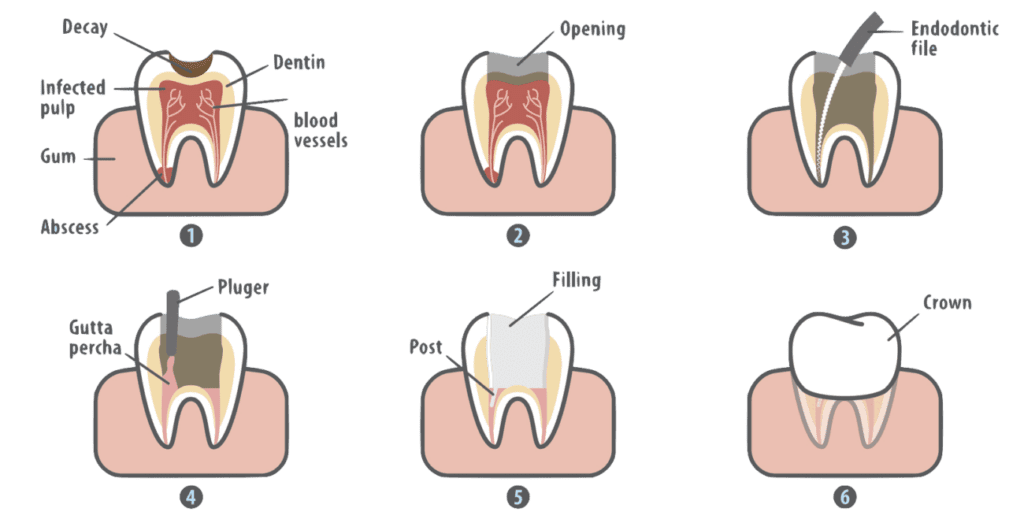
What to Expect: Root Canal Therapy
If you need a root canal, your dentist will first make sure you’re as comfortable as possible. They will give you a local anesthetic to numb the area where they’ll work. Once you’re comfortable and relaxed, the procedure will start.
Your dentist will make a small opening in your tooth to reach the inside. They will use a special tool to remove the infected tissue and any debris inside the tooth.
After removing the infected pulp, the pain will go away. Then the dentist will clean and prepare the tooth for a filling material called gutta-percha, which helps prevent future decay.
Your dentist will take digital images or molds of your tooth to make a custom crown. This crown will fit perfectly over the treated tooth, helping to stabilize your bite.
Root Canal Aftercare and Recovery
Taking care of your tooth after a root canal is important for a smooth recovery and to ensure the procedure works well in the long term. Here are some tips to follow after root canal therapy:
- Follow Instructions: We will give you specific care instructions. These will be different for each patient and may include how to manage pain and take any prescribed medicine.
- Avoid Chewing on the Treated Tooth: Don’t chew on the tooth until we place a crown or a permanent filling to avoid damaging it. The tooth will be sensitive to hot and cold foods and drinks.
- Brush and Floss: Brush your teeth twice a day and floss daily. Be gentle around the treated tooth to avoid irritation.
- Avoid Smoking and Alcohol: Smoking and drinking alcohol can slow healing. Try to avoid them for at least 48 hours after the procedure.
Root Canal FAQs
Root canals are an important part of keeping your teeth healthy. Many people are nervous about them, so we encourage you to ask as many questions as you need. Check out our FAQs about root canals and contact our office if you need more information.
Does a root canal hurt?
No, most patients report that GentleWave® therapy is comfortable and virtually pain-free. Local anesthesia is used to ensure you remain relaxed and free of discomfort during the procedure. Because GentleWave® is minimally invasive and reduces the need for extensive filing, it typically causes less irritation to surrounding tissues. Many patients find they have little to no soreness after treatment.
Patient Review
What happens if I don’t get a root canal when I need one?
If an infected tooth is left untreated, the infection can spread to the surrounding bone and tissues, leading to severe pain and swelling. In some cases, it can cause abscess formation or even systemic health problems. Without treatment, the tooth may eventually die and require extraction.
Will dental insurance cover a root canal?
Most dental insurance plans that cover traditional root canal therapy also cover GentleWave® treatment. Coverage amounts and copays can vary, so it’s best to check with your insurance provider or have our team verify your benefits. Even if some costs are out of pocket, patients often find the comfort and long-term results worth the investment. Our office can help you explore financing options if needed.
How does GentleWave® clean the tooth so thoroughly?
The GentleWave® system uses multi-sonic energy to activate a stream of treatment fluids that move through the intricate canals inside the tooth. These sound waves create microbubbles that help remove debris, bacteria, and tissue from even the tiniest spaces. The fluid flow ensures a complete and even cleaning of the root canal system. This deep cleaning helps reduce the chance of reinfection and promotes long-term success.
Does GentleWave® have a higher success rate than traditional root canals?
Studies have shown that GentleWave® therapy achieves exceptional cleaning results, often leading to higher success rates compared to traditional root canals. Its ability to remove more bacteria and debris from complex canal systems reduces the risk of reinfection. Patients also experience fewer complications and faster healing. This makes GentleWave® a reliable, long-lasting solution for saving natural teeth.
Do I need a crown after a root canal?
In most cases, yes. A dental crown is recommended after any root canal treatment, including GentleWave®. The crown helps restore strength, function, and protection to the treated tooth. Because GentleWave® preserves more of your natural tooth structure, your dentist may be able to use a more conservative restoration. We’ll discuss the best restoration option for your specific case.
Schedule an appointment today with Claremont Dental Institute by calling (909) 277-6919 or request an appointment online. One of our expert dentists will check your tooth to see if a root canal is the right treatment for you.