Your dentists at Claremont Dental Institute offers 100% metal-free ceramic dental implants for a holistic solution to your missing teeth. We provide our patients with missing teeth the most natural solution available in modern implant dentistry. A leader in ceramic dental implants, our team helps patients achieve natural, lasting results using implant dentistry.
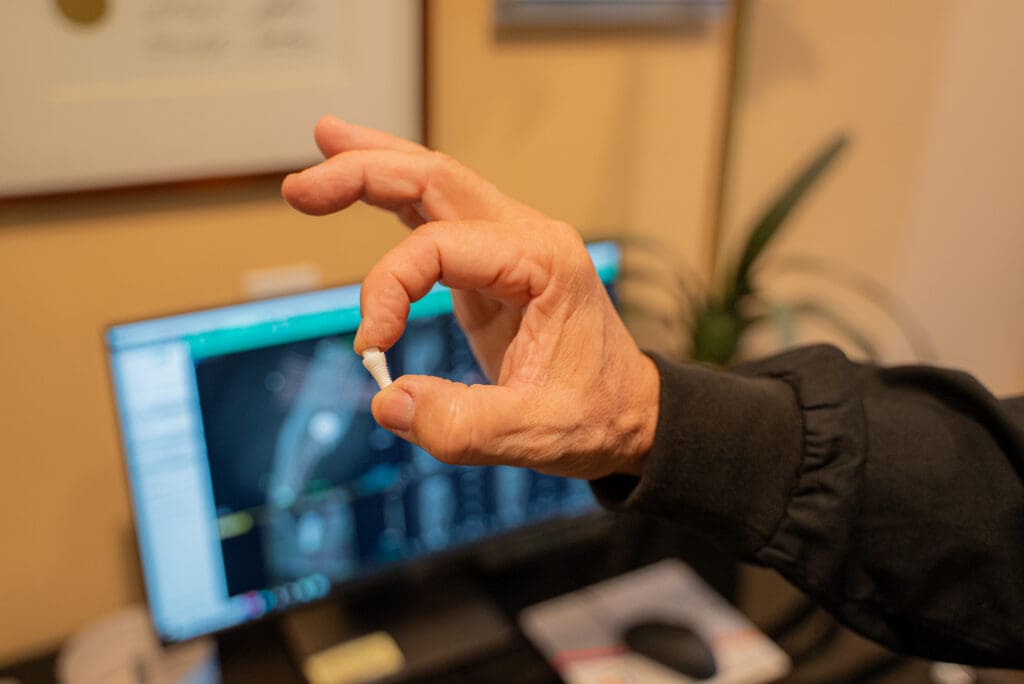
What Are CeraRoot Dental Implants?
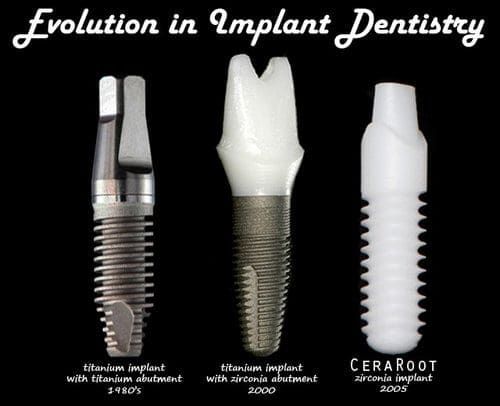
CeraRoot ceramic dental implants are biocompatible and metal-free. The process produces a natural-looking mouth after tooth loss.
Ceramic dental implants have the same benefits as traditional dental implants. They look real, and they are resistant to corrosion. However, ceramic doesn’t trigger metal allergies. Ultra-strong ceramic implants support a stable oral foundation and optimal function of the bite and jaw.
Ceramic implants provide long-lasting results that look and feel like natural teeth. The success of CeraRoot ceramic implants is due to the implant’s ability to withstand forces from the masticatory system. CeraRoot zirconia implants mimic the contours and bioinert composition of natural human teeth and simulate natural bite function.
The ceramic material integrates entirely into the jawbone, creating a stable bond. Zirconia is resistant to corrosion and less temperature-sensitive than titanium dental implants.
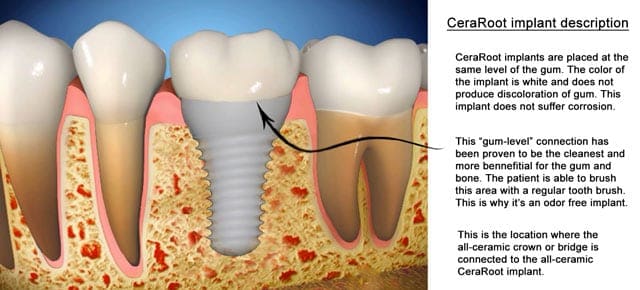
Zirconia 100% ceramic implants are white for a more aesthetic result. Their white color is ideal for older patients or patients with translucent or receding gum lines. You will not have to worry about gum discoloration either.
Patient Review
Dental Implants For Patients With Titanium Allergy
Ceramic dental implants enable patients with allergies or compromised immune systems to replace missing teeth. CeraRoot zirconia implants are hypoallergenic and safe for patients with sensitivity or allergies.
For some patients, sensitivity to metal only becomes apparent after the placement of a metal implant. Patients may experience itchy gums, irritation, or a failure of the metal implant, leaving patients susceptible to bone loss.
Patients with allergies or compromised immune systems may consider a MELISA test prior to choosing an implant system.
“Ceramic Implants offer an alternative esthetic solution to treat patients with specific needs. Many patients are increasingly health conscious and express their explicit wish for a metal-free alternative. Ceramic Implants are a great solution here and serve the foundation for a beautiful, healthy new smile.” – Dr. Steve Fountain
Holistic Solutions for Missing Teeth
CeraRoot dental implants are an ideal option for patients who adhere to holistic lifestyle practices. CeraRoot ceramic implants are bioinert and don’t prevent the movement of energy throughout the body.
The one-piece design of the ceramic implant helps reduce the buildup of oral bacteria that can occur with the slight, gradual movement of metal implants. Ceramic implants prevent the release of toxins and bacteria into the body, helping to prevent inflammation around the implant.
They’re becoming more common as their strength and aesthetic benefits become more obvious. Ceramic CeraRoot dental implants help build a stable oral foundation for optimal function, overall health, and a beautiful smile.
Titanium vs. Ceramic Implants: Which Is Right for You?
If you’re considering dental implants, you have two main material choices: traditional titanium or metal-free ceramic (zirconia). Both can successfully replace missing teeth, but they work differently. Here’s what you need to know to make an informed decision.
Titanium Implants: The Traditional Choice
Titanium implants have been used for decades and have a long track record of success. They are strong, lightweight, and integrate well with bone. However, they do have some drawbacks:
- Metal composition: Titanium is a metal alloy that contains trace amounts of other metals, like aluminum.
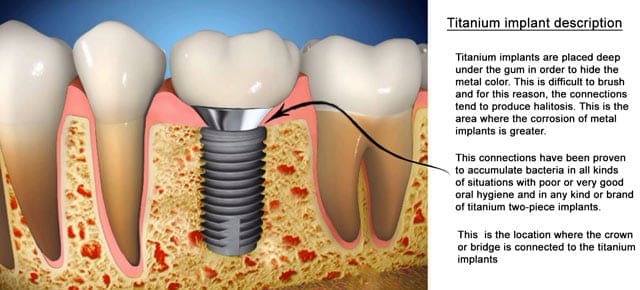
- Visibility: The gray metal can sometimes show through thin gums or if gums recede over time.
- Allergy risk: A small percentage of patients may develop metal sensitivities, sometimes years after placement.
- Corrosion concerns: Metal implants can corrode over time, releasing particles into surrounding tissue.
- MRI interference: Titanium can distort MRI images, though it’s generally safe for the scans.
Ceramic Implants: The Metal-Free Alternative
Ceramic (zirconia) implants are a newer option gaining popularity, especially among our health-conscious patients. They offer several advantages:
- 100% metal-free: Made from biocompatible zirconia, they contain no metal.
- Natural appearance: The white material blends seamlessly with natural teeth and never causes gray shadows at the gumline.
- Hypoallergenic: Ideal for patients with metal sensitivities, autoimmune conditions, or those following holistic health practices.
- Resists plaque buildup: Studies suggest ceramic may accumulate less plaque than titanium, supporting healthier gums.
- MRI safe: No interference with medical imaging if you need scans in the future.
- One-piece design: Many ceramic implants are single pieces with fewer parts, reducing the number of potential bacterial traps.
Both materials can give you a strong, functional smile. The right choice depends on your priorities. Dr. Fountain will evaluate your bone health, gum tissue, and overall health to recommend the best option. Either way, you’re investing in a solution that can restore your smile for years to come.
The CeraRoot Dental Implant Process
Our dentists will recommend CeraRoot implants for patients who have just recently lost their teeth. We place these implants during the same appointment as your tooth extraction(s).
The one-stage placement of dental implants minimizes discomfort and maximizes success. Sufficient bone and healthy gums are essential at the implant site for a secure and lasting result.
Claremont Dental Institute provides thorough consultations, medical history evaluations, and dental health exams to determine which implant procedure will provide optimal results. We handle all phases of treatment in-house from the comfort of our Claremont, CA, dental office.
Our team of dentists works collaboratively to provide comprehensive dental services, including missing-tooth replacement, under one roof.
CeraRoot ceramic implants provide a shorter implant process than metal implants. Metal implants require separate visits for each piece of the restoration. CeraRoot options are more streamlined and help reduce the number of necessary visits.
Compared with traditional dental implants, patients enjoy a shorter implant process. Along with the potential for a significant increase in comfort and function afterward. Nothing matches the biocompatibility and the strength of the zirconia implant.
Frequently Asked Questions
How long do ceramic implants last?
On average, ceramic dental implants can last anywhere from 10 to 15 years. The lifespan of the implants can vary based on the patient’s diet, oral care routine, and lifestyle habits. Those who take good care of their teeth and gums, avoid harmful habits like smoking, and maintain regular dental visits may see their ceramic implants last even longer.
Why use ceramic dental implants?
Ceramic dental implants are a great choice for many reasons. They significantly reduce the concern of bacteria and plaque buildup on the implant surface. This makes it easier to keep your gums healthy. Ceramic implants are also more biocompatible, which means they’re less likely to cause an allergic reaction or irritation.
They are naturally white, providing a more natural look, and they don’t interfere with MRI scans. Gum recession and swelling are also less common with ceramic prosthetics, making them a more comfortable and aesthetically pleasing option.
What is one of the disadvantages of ceramic dental implants?
One disadvantage of ceramic dental implants is that they are less flexible than other types of dental implants. While ceramic is strong, it’s more prone to cracking or chipping under extreme pressure. However, they are still as strong as your natural tooth enamel, and this risk is relatively low. Avoid excessive force, like grinding your teeth, which could increase the risk of damage.
Are ceramic implants safer than titanium implants?
While both ceramic and titanium implants are safe and effective, ceramic implants are a safer option for some patients. This is mainly because ceramic implants are made from materials that are less likely to cause allergic reactions or sensitivities, unlike titanium. For patients with metal allergies or sensitivities, ceramic implants may be a better option.
Are ceramic implants suitable for everyone?
Ceramic implants may not be the best option for everyone. People with certain health conditions, like severe bone loss or chronic gum disease, may not be good candidates for ceramic implants. Your dentist or oral surgeon will evaluate your oral health and discuss the best options for your situation. In some cases, a bone graft or other treatments can make a patient suitable for an implant.
How do I care for ceramic dental implants?
Caring for ceramic dental implants is similar to caring for your natural teeth. Brushing twice a day, flossing daily, and visiting your dentist regularly are important to keep your implants clean and healthy. Avoiding hard foods and habits like grinding or clenching your teeth will also help protect your implants. Follow your dentist’s instructions for the best long-term care.
Schedule a Visit Today
If you’re ready to explore a metal-free, biocompatible solution for your missing teeth, we’re here to help. Dr. Steve Fountain and our team will take the time to understand your health goals and determine if ceramic and zirconia implants are right for you. We handle every step of the process in our Claremont, CA office.
Call our new-patient line today at (909) 277-6919 to schedule your consultation, or request an appointment online. Let’s work together to restore your smile in a way that supports your whole-body health.